

Blog
How Do Police Officers Measure Window Tint During a Traffic Stop?
During a traffic stop, an officer measures window tint with a handheld tint meter such as the Tint-Chek. The officer turns the meter on, places it on the window glass, and reads the visible light transmission (VLT) percentage on the display. That number is compared to the state's legal limit.
What tool do police use to measure window tint?
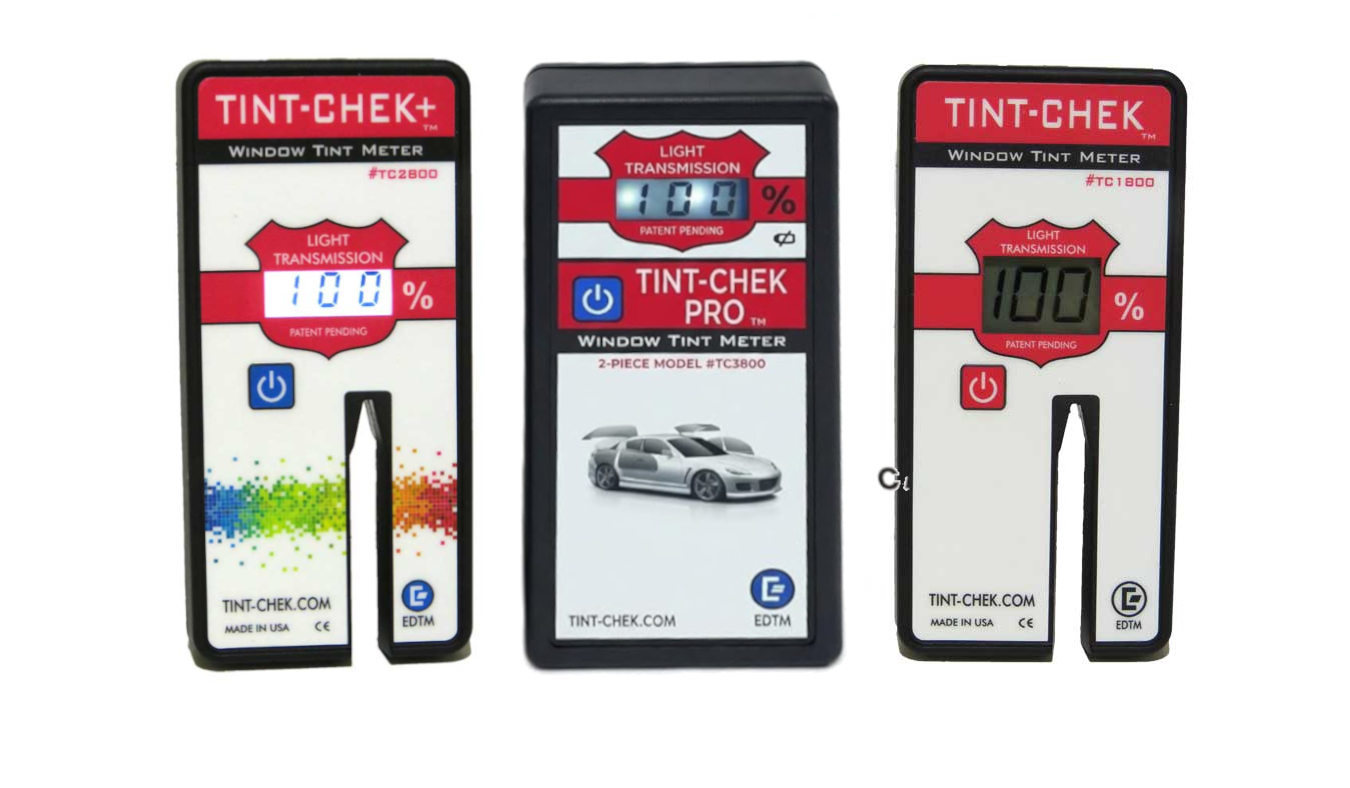
Officers use a car tint meter to measure how much light passes through a vehicle's window. The Tint-Chek line, including the TC1800, TC2800, and TC3800 PRO, shows the result as a VLT percentage, so the officer has a number to compare to the law instead of an estimate by eye.
How do officers test window tint step by step?
A Tint-Chek check takes three basic actions: turn on, place, and read. In a traffic stop, the full process looks like this:
1. Make the stop safely. Follow your department's procedures for approaching and positioning at the vehicle.
2. Know the limit. Confirm the legal VLT for the window you are testing, such as front side, rear side, or windshield.
3. Clean the glass. Dirt on the window can affect the reading.
4. Turn the meter on. Wait until it displays 100%, which means it is ready to measure.
5. Place it on the window. Place the Tint-Chek on the window glass.
6. Read the result. The meter holds the VLT value on the display.
7. Compare and record. Compare the number to the legal limit and document the result under department policy.
What does the tint meter reading mean?
The reading is the percentage of visible light that gets through the window. A lower number means a darker window. Whichever tint tester your department uses, the number only matters when it is checked against your state's limit for that specific window. Limits vary by state and by window position, so officers should always check current state law.
How do the Tint-Chek models differ?
• TC1800: a one-piece, horseshoe-shaped meter.
• TC2800: adds a backlit display and reads to the nearest 0.1%.
• TC3800 PRO: a two-piece design that tests the windshield, rear, and side windows, with a backlit display and 0.1% resolution.
Frequently asked questions
What does VLT mean on a tint meter?
VLT stands for visible light transmission. It is the percentage of visible light that passes through the window. A lower number means darker tint.
Does the tint meter reading include the glass and the film?
Yes. The reading shows how much light passes through the window as a whole, so it accounts for the glass and any film or tint applied to it.
Is the legal tint limit the same in every state?
No. Limits vary by state and often by window position and vehicle type, so check the statute for your jurisdiction before you test.
Can a Tint-Chek test the windshield and rear window?
Yes, with the two-piece TC3800 Tint-Chek PRO, which is designed to test the windshield as well as rear and side windows.
Can a Tint-Chek be read at night?
Yes. The TC2800 and TC3800 have a backlit display, so results are easy to read at any time of day.
How thick a window can a Tint-Chek measure?
Tint-Chek meters measure glass and film up to 1/4 inch (6.5 mm) thick.
Built for daily patrol use
Tint-Chek meters have no mechanical lever switches or moving parts, which supports reliability and durability in the field. To see how a meter fits into WindowTint Enforcement in the field, read our full guide.