

Blog
Digital Tint Meter for Patrol: How to Test Tint in Rain, Heat, and Roadside Conditions
A digital tint meter for police has to give a usable reading when the light changes, the weather turns, or the stop is on a dark road. This guide covers what the Tint-Chek manuals and product pages say about testing tint in conditions officers meet on patrol, from changing light and hot weather to dirty glass, window edges, and defrost lines.
What roadside conditions affect a tint meter reading?
|
Condition |
What Tint-Chek says |
Models |
|
Headlights and cloud cover |
Patent-pending techniques remove ambient light conditions that change in the testing environment. |
All models |
|
Evening, dark, or indoors |
A backlit LCD display is made for use indoors and at night. |
TC2800, TC3800 |
|
Hot or cold weather |
Operating temperature is 0 °F to 122 °F (-17 °C to +50 °C). Storage is -4 °F to 158 °F (-20 °C to +70 °C). |
All models |
|
Patrol car storage |
The manual does not recommend storing the instrument in an automobile overnight during extreme temperature seasons. |
TC3800 manual |
|
Dirty glass |
Clean the glass. Fingerprints, dirt, and defects can affect the transmission values. |
All models |
|
Window edges |
Testing on the extreme edge can negatively affect the result. Film near the edges might not cover the entire window. |
TC1800, TC2800 |
|
Tilting |
Do not tilt the meter or the glass. Hold the glass perpendicular to the sensor. |
TC1800, TC2800 |
|
Defrost lines |
Suction cups will not stick on defrost lines. Rotate the reflector unit 90 degrees to put both cups between the lines. |
TC3800 |
How do headlights and cloud cover affect a patrol tint meter?
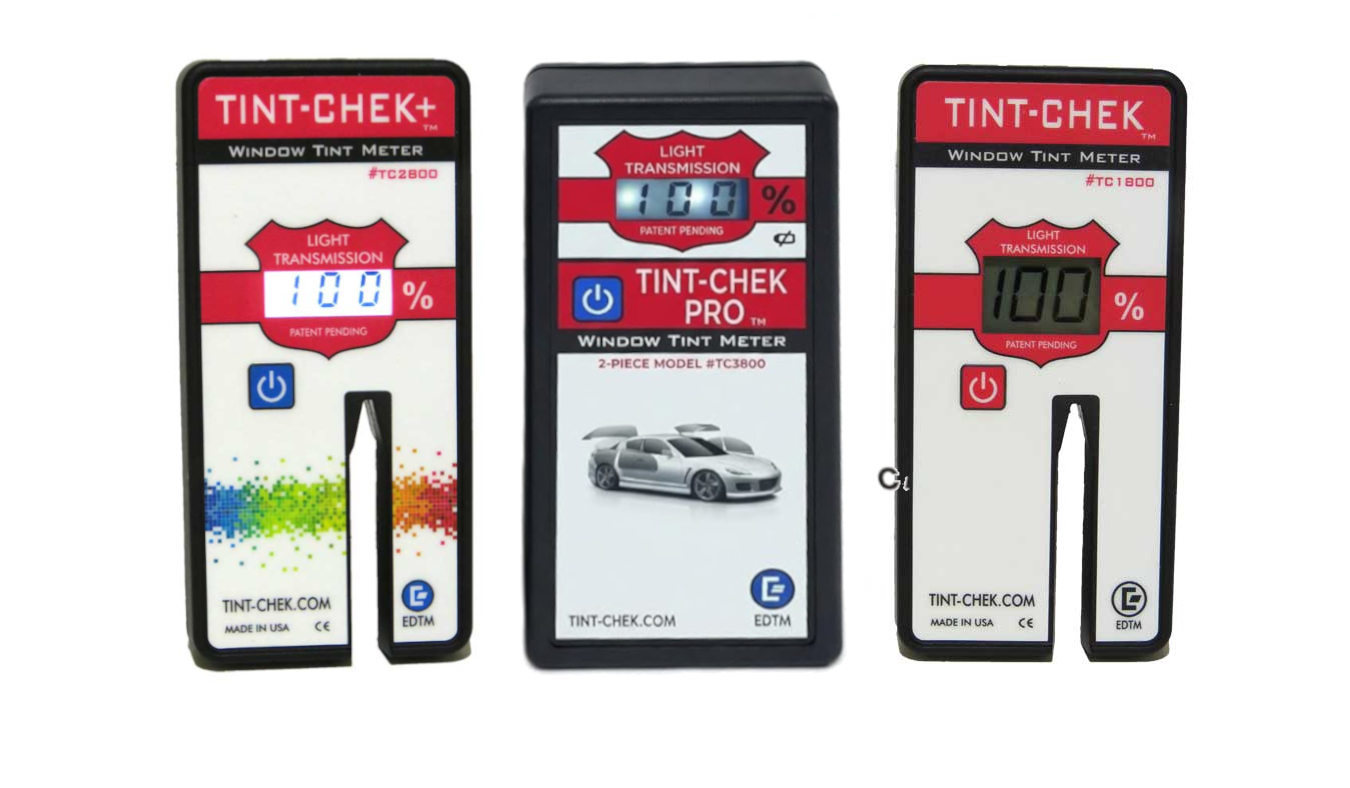
Stray headlights and cloud cover have been known to affect the performance of older VLT meters. Tint-Chek meters use patent-pending techniques to remove ambient light conditions that can change in the testing environment. That matters for an officer using a tint tester at the roadside, where the light can change from one minute to the next.
How do you test tint at night or on a dark road?
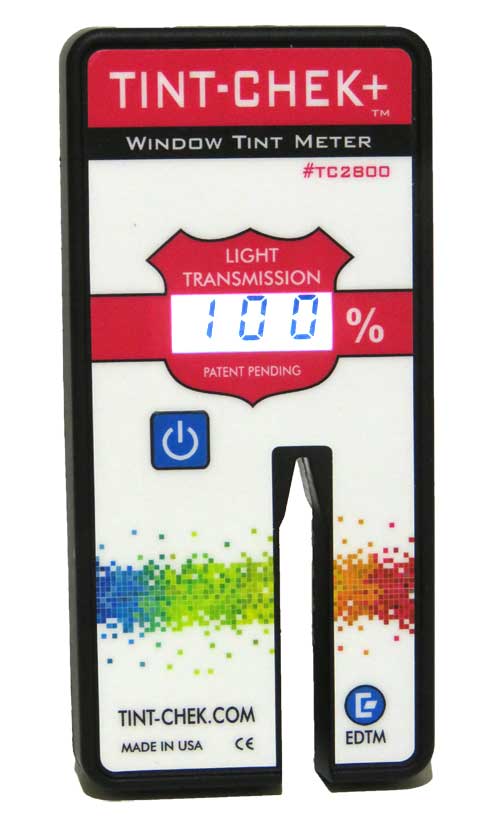
The TC2800 and TC3800 have a backlit LCD display. Backlighting helps in darker environments, especially in the evening, on overcast days, and indoors. The TC2800 manual describes the display as back-lit for use indoors and at night.
How do you test tint in the rain?
Every Tint-Chek quick-start guide includes the same step for any weather: clean the glass. Fingerprints, dirt, and defects on the glass can affect the transmission values, so start every test by cleaning the spot on the window where the car tint meter will sit.
Between tests, keep the meter in the protective carrying case that comes with every Tint-Chek. For wet-weather use, follow your department's policy.
How does heat affect testing?
The TC1800, TC2800, and TC3800 manuals each list an operating temperature of 0 °F to 122 °F (-17 °C to +50 °C) and a storage temperature of -4 °F to 158 °F (-20 °C to +70 °C). Keep the meter within those ranges when you use it and when you store it.
The TC3800 manual adds one tip for patrol work: it does not recommend storing the instrument in an automobile overnight during extreme temperature seasons. When the meter is not in use, store it in the carrying case.
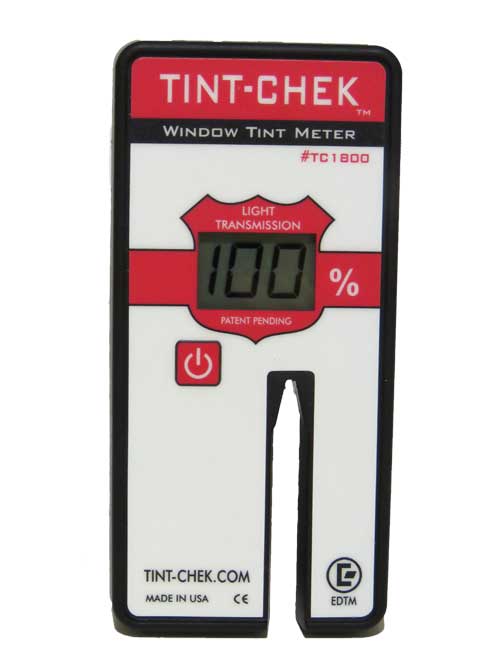
How do you test tint with a one-piece TC1800 or TC2800?
1. Roll down the window at least 3 inches.
2. Clean the glass.
3. Turn the meter on. The display reads 100% when the meter is ready to begin testing.
4. Slide the meter over the edge of the glass and read the result on the display.
5. Re-test the window to confirm your first test.
The manuals list a testing time of 2 seconds. A few reminders from the manuals:
• Slide the meter completely onto the glass until it presses against the stop location and clamps in the meter opening. This keeps the edge of the glass from blocking the sensor.
• Do not tilt the meter or the glass.
• Avoid testing on the extreme edge of the window, and watch for film near the edges that might not cover the entire window.
• If you turn the meter on while it is on the glass, it calibrates to 100% with the glass in place. Remove the meter, which then shows -E and powers off, and turn it back on with no glass in the opening.
How do you test tint with the two-piece TC3800?
1. Clean the window area being tested.
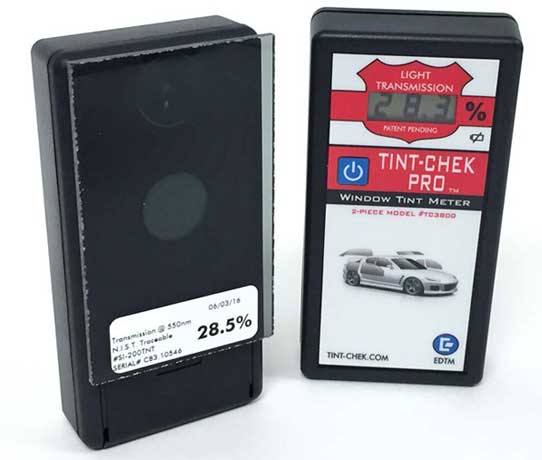
2. Place both units together, back-to-back with no glass between them. Let the magnets align them, then turn the power on.
3. Wait for 100% on the display, then pull the two halves apart.
4. Place the reflector unit on the inside of the window. Push it firmly against the window so the suction cups secure it.
5. Place the instrument unit on the exterior of the window. Let the magnets help align the two halves.
6. Press and release the power switch to view the VLT value.
7. Remove the instrument. It powers off automatically. Repeat from step 1 if you want to confirm the measurement.
On rear windows, look for the defrost lines printed on the glass. Suction cups will not stick on them. If you cannot find a spot where both cups miss the lines, rotate the reflector unit 90 degrees so both cups sit between the lines.
If an E1, E2, or E3 error appears, turn the instrument off, make sure the two enclosures are properly aligned with no glass between them, and test again. An E1 error can also appear if you take a measurement without placing the instrument on glass. Keep the reflector area clean with compressed air, or a micro-fiber cloth for smudges.
Which Tint-Chek fits patrol conditions?
The TC1800 is a one-piece meter for side windows. The tint tester for police in the line is the TC2800, which adds a backlit display for evening and overcast conditions. The TC2800 is described as ideal for police. For windshield and rear-window testing, go with the two-piece TC3800. All three are designed for law enforcement and police.
Frequently asked questions
Can officers test tint at night with a digital tint meter?
Yes, with a backlit display. The TC2800 and TC3800 have a backlit LCD, which is made for use indoors and at night.
Do headlights or cloud cover affect a Tint-Chek reading?
Changing ambient light has been known to affect older VLT meters. Tint-Chek meters use patent-pending techniques to remove ambient light conditions that change in the testing environment.
What temperatures can a Tint-Chek operate in?
The TC1800, TC2800, and TC3800 manuals each list an operating temperature of 0 °F to 122 °F (-17 °C to +50 °C) and a storage temperature of -4 °F to 158 °F (-20 °C to +70 °C).
Can officers leave a tint meter in the patrol car overnight?
The TC3800 manual does not recommend storing the instrument in an automobile overnight during extreme temperature seasons. Store it in the carrying case when it is not in use.
How long does a test take?
The TC1800 and TC2800 manuals list a testing time of 2 seconds.
Should officers clean the glass before testing?
Yes. Cleaning the glass is a step in every Tint-Chek quick-start guide. Fingerprints, dirt, and defects on the glass can affect the transmission values.
Where on the window should officers avoid testing?
Avoid the extreme edge of the window, which might negatively affect the result because of the edges of window film. Also watch for film near the edges that might not cover the entire window.
What if an officer turns the meter on while it is on the glass?
On the TC1800 and TC2800, the display calibrates to read 100% with the glass in place. Remove the meter and it displays -E and powers off. Turn it back on with no glass in the opening and it shows 100%.
Can a Tint-Chek test the windshield and rear window?
Yes, with the two-piece TC3800, which is designed to test the windshield as well as rear and side windows.
How do officers know the battery is low?
On the TC1800 and TC2800, "-battery-" scrolls across the screen. On the TC3800, the battery indicator illuminates. The meter can still be used, but replace the battery soon.
Choose a tint meter for your patrol
For windshield, rear window, and side window testing in one meter, see the car tint meter for law enforcement in the Tint-Chek line, the two-piece TC3800 PRO.