

Blog
The Complete Guide to Commercial Vehicle and Rideshare Window Tint Enforcement for Law Enforcement
Key takeaways: Tint rules can differ by vehicle class, so identify what you are looking at before you test. Rideshare vehicles are usually privately owned passenger vehicles, but local for-hire rules may add requirements. Measure the correct window with a tint meter, apply the limit that fits the vehicle and window, check exemptions, and document everything. Always confirm current state and local law.
Window tint enforcement gets more complicated when the vehicle is not a standard passenger car. Vans, trucks, buses, limousines, taxis, and rideshare vehicles may fall under different rules. This guide helps officers organize the questions to ask before testing.
Step 1: Identify the Vehicle Class
Many states set different tint limits for passenger cars and for multipurpose vehicles such as SUVs, vans, and trucks. Buses, limousines, and for-hire vehicles may have separate provisions. Start with the registration and vehicle information, then find the rule that applies to that class in your state. A resource like commercial vehicle window tint guidance by state can help you find the right section, but always confirm the current statute.
Step 2: Understand Rideshare
Rideshare drivers typically use their own passenger vehicles, so the passenger vehicle rules usually apply. Some cities, airports, and states also set vehicle requirements for for-hire service, so check local rules rather than assuming.
Step 3: Check Commercial Motor Vehicle Rules
For commercial motor vehicles, federal motor carrier safety regulations also address glazing. Verify the current text of the regulation and any state adoption before relying on it in the field.
Step 4: Measure the Right Window
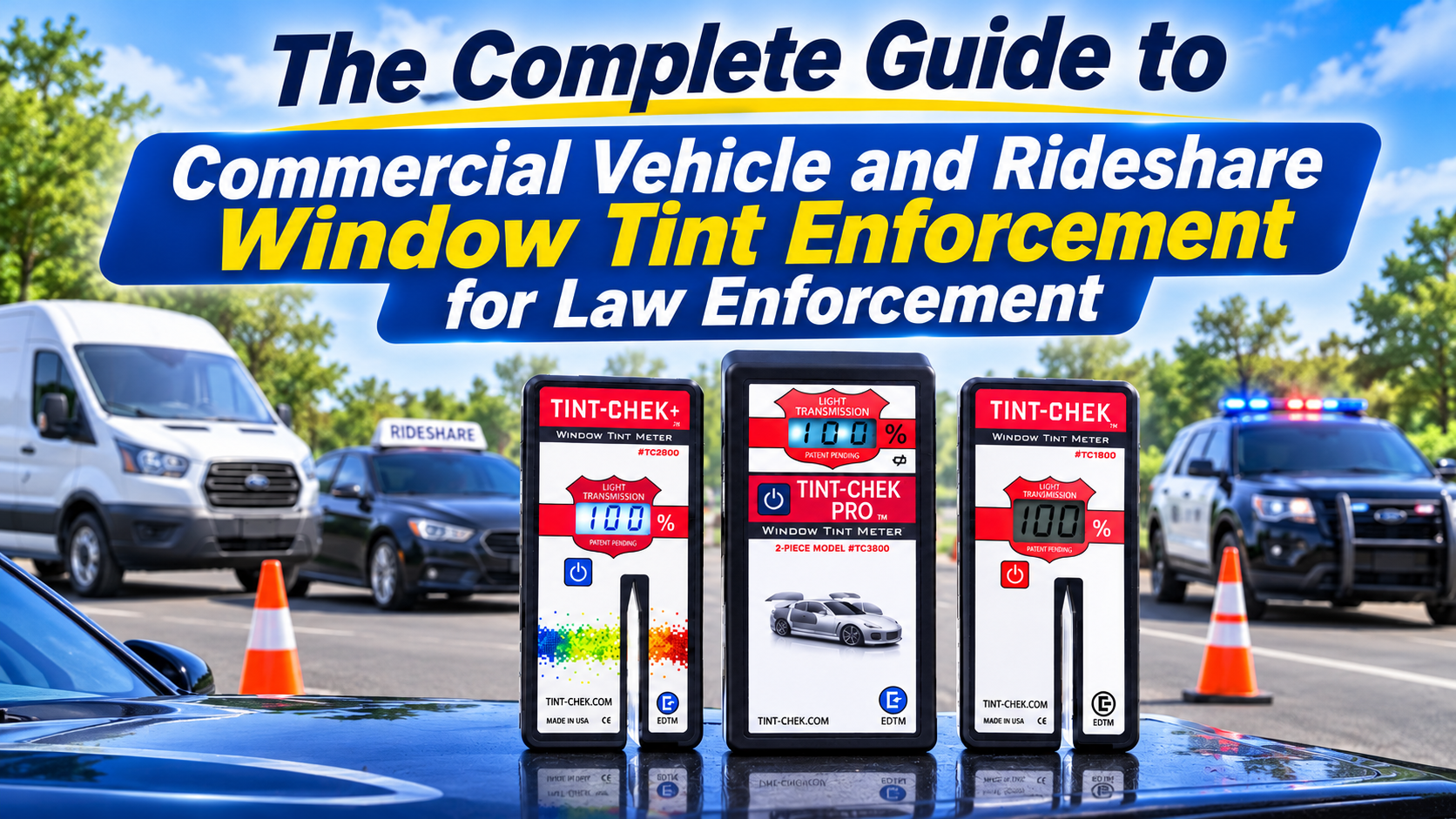
Test the window position that the statute covers, such as front side, rear side, or rear. All Tint-Chek meters read accurately to ±2%. The Tint-Chek PRO displays to the nearest 0.1%, but its accuracy remains ±2%. Follow your agency's policy for borderline readings.
Step 5: Check Exemptions
Medical exemptions and vehicle-specific exceptions may apply. Know how your state documents them and how officers verify them.
Step 6: Document Thoroughly
• Vehicle class, plate, and registration details
• Window position tested and the reading
• Meter model, serial number, date, and time
• Any exemption claimed and how it was verified
Careful notes are the foundation of defensible enforcement, and they connect directly to the guidance in tint meter evidence practices.
Quick Decision Table
|
Question |
Why it matters |
|
What class of vehicle is it? |
Limits can differ for cars, multipurpose vehicles, buses, and limousines |
|
Which window is being tested? |
Front side, rear side, and rear windows often have different limits |
|
Is it used for hire? |
Local for-hire rules may add requirements |
|
Is an exemption claimed? |
Verify it according to your state's process |
|
Is the reading documented? |
Records support the citation if it is contested |
Common Vehicle Types and the Question to Ask
|
Vehicle type |
Question to ask |
|
Passenger car |
Which windows does the statute cover, and what is the limit for each? |
|
SUV, van, or truck |
Does the state set a different rear window rule for multipurpose vehicles? |
|
Taxi or livery |
Do local for-hire rules add requirements? |
|
Rideshare vehicle |
Is the vehicle a private passenger car, and do local rules apply? |
|
Bus or limousine |
Does the statute give separate provisions or exemptions? |
|
Commercial motor vehicle |
Do federal motor carrier regulations also apply? |
Roadside Conversation Tips
• Explain what you are checking and why.
• Ask whether the driver holds an exemption, and explain how to verify it.
• Avoid assumptions about vehicle class. Confirm it.
• Stay consistent so every driver gets the same treatment.
Build an Agency Reference Sheet
1. List each vehicle class and the statute section that applies.
2. Add the limit for each window position.
3. Include notes on exemptions and local for-hire rules.
4. Add the date the sheet was last reviewed against current law.
Training Scenarios
• A rideshare driver with dark rear windows on a passenger car
• A cargo van with a dark rear window but clear front windows
• A limousine with privacy glass throughout
• A driver presenting a medical exemption document
Common Mistakes
• Applying the passenger car rule to every vehicle
• Testing the wrong window position
• Skipping the exemption check
• Failing to record the vehicle class in the notes
Frequently Asked Questions
Do rideshare vehicles follow different tint rules?
Usually they follow the passenger vehicle rules of the state, but check local for-hire requirements.
Are tint limits the same for every vehicle type?
No. Many states set separate limits for different vehicle classes and window positions.
Do taxis and limousines follow different tint rules?
Often there are separate provisions at the state or local level. Check your jurisdiction's statute and local for-hire rules.
How should officers handle a driver who says the tint is required by their company?
Apply the law that governs the vehicle and document the claim. Follow agency policy for any exemptions or special requirements.