

Blog
Community Education on Window Tint: How Departments Explain Tint Laws to Drivers
Many tint violations start with a simple misunderstanding. A driver buys a car, or has film installed, without knowing the legal limit. Community education reduces those surprises, builds trust, and makes roadside conversations easier. Here is how departments can do it well.
Why Education Matters
• Drivers who understand the law are more likely to comply before they are stopped.
• Clear public information makes enforcement look consistent and fair.
• Fewer misunderstandings make stops calmer for drivers and officers.
Know What to Say
Keep the message short and accurate. Explain that tint limits are stated as a minimum visible light transmission (VLT) percentage, that limits differ by window position and sometimes vehicle type, and that the rules vary by state. Point people to the official statute or your state's published guidance, and mention that exemptions, such as medical exemptions, have their own process. A reference like window tint laws by state can help officers find the right starting point, but always share current local rules.
Choose Your Channels
• Agency website and social media: short posts and a simple FAQ page on tint rules.
• Handouts at stops: a card that explains the limit and where to find the full statute.
• Community events: safety fairs, school events, and neighborhood meetings.
• Local installers and dealers: share your agency's information so that drivers hear it before they buy.
Use a Live Demonstration
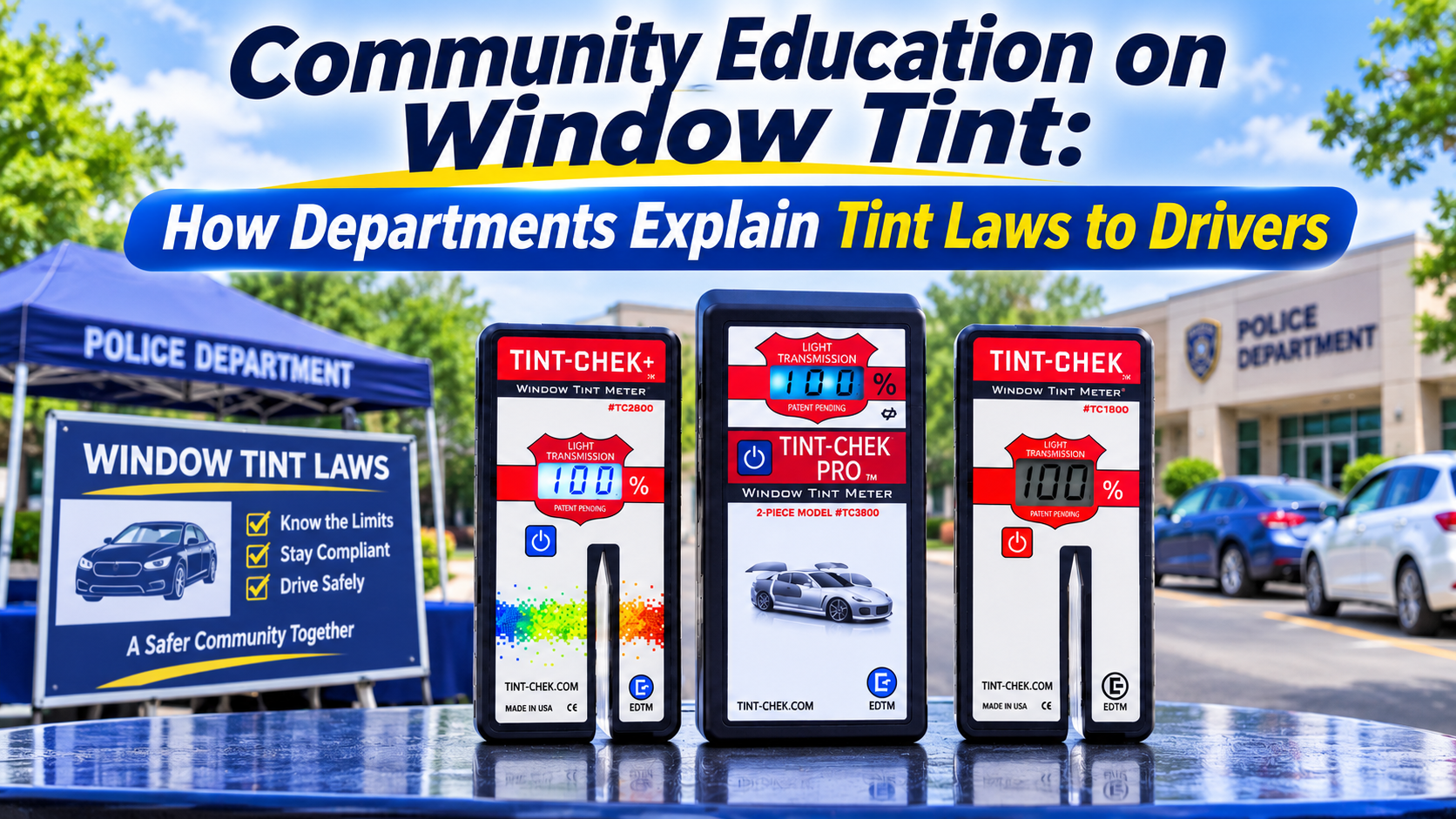
A tint meter demonstration at a community event makes the idea concrete. Let visitors see how a reading works on sample glass. Tint-Chek meters read accurately to ±2%, so the demonstration reflects the same standard officers use in the field.
Stay Consistent With Enforcement
Your messaging should match your actual practice. If your policy gives officers discretion on warnings, say so in general terms. Tie public information to your department's written window tint enforcement procedures so that everything lines up.
Measure Whether It Works
Track complaints, warnings, and citations over time, along with the number of people reached. Adjust your channels based on what you learn.
Sample Messages
• "Know your tint limit before you tint. Limits vary by window and by state."
• "Tint is measured in visible light transmission. A lower number means darker glass."
• "Have a medical exemption? Learn how to document it in our state."
• "Questions about tint? Visit our website for the state law and a contact."
Plan a Meter Demonstration for an Event
1. Bring sample glass with different tint levels.
2. Invite visitors to guess the percentage, then show the reading.
3. Explain what the number means and where to find the state law.
4. Hand out a card with your agency's contact information.
Partner With the Community
Local installers, dealerships, and auto shops talk to drivers before the officer ever does. Sharing accurate information with them helps drivers make informed choices. Keep partnerships transparent and consistent with agency policy.
Common Pitfalls
• Sharing information that does not match the current statute
• Using technical language that confuses drivers
• Educating the public without matching your enforcement practice
Frequently Asked Questions
What should a tint education flyer include?
The legal VLT limits by window, how to find the statute, how medical exemptions work, and who to contact with questions.
Can a tint meter be used at community events?
Yes. A live reading on sample glass helps people understand what the numbers mean.
How often should education materials be updated?
Review them whenever the law or agency policy changes, and check them at least once a year.