

Blog
Window Tint Laws by State: A Quick Reference for Patrol Officers
Window tint limits are set state by state, and they change. Patrol officers who work across jurisdictions, or who simply want to stay current, need a way to look up the correct window tint laws quickly and confirm them against the statute. This guide explains how those laws are structured, what to check for every vehicle, and how to build a reference card you can trust.
Key Takeaways
• Tint limits are set state by state and differ by window: windshield, front sides, rear sides, and rear window.
• VLT limits are written as a minimum: the window must pass at least that percentage of light.
• Several states changed limits in 2025 and 2026, so confirm every entry against the current statute.
• Use the snapshot below as a starting point, not a substitute for the statute or your agency’s legal guidance.
How Tint Laws Are Structured
Windshield
Most states limit tint on the windshield to a strip across the top, often defined by a line marked on the glass or a measurement from the top edge. Some states describe it differently, so read the exact wording.
Front side windows
These are the windows beside the driver and front passenger. Front side limits are commonly the strictest after the windshield. Some states allow only clear film, and others allow considerably darker tint.
Rear side windows and rear window
Many states allow darker tint behind the driver, but the limits are not uniform. Some use the same limit as the front, some allow any darkness, and some apply different rules based on vehicle type.
Reflectivity, color, and other rules
Beyond VLT, states may regulate how reflective film can be, which colors are prohibited, and whether additional side mirrors are required when the rear window is tinted. Treat these as separate checks from the VLT reading.
Vehicle type
Some states apply different rules to sedans versus SUVs, vans, or other multipurpose vehicles. Confirm how the statute defines the vehicle you stopped.
Exemptions
Some states recognize medical exemptions for darker tint. The process and required documentation depend on the state.
Understand What VLT Limits Mean
VLT, or visible light transmission, is the percentage of visible light that passes through the glass and film. State VLT limits are typically written as a minimum VLT, meaning the window must let at least that percentage of light through. A lower VLT means darker tint. Be sure to read whether the statute applies the limit to film alone or to the glass and film combined, since a tint meter measures what passes through the entire assembly.
A note on accuracy: published charts of state limits sometimes disagree, and states revise their rules. The snapshot below includes only states whose values matched across multiple tint-industry sources in October 2026. Treat it as a starting point and confirm against the statute.
Snapshot: Selected States (Consistent Across Multiple Published Sources)
|
State |
Front sides |
Rear sides |
Rear window |
|
Alabama |
32% |
32% |
32% |
|
Alaska |
70% |
40% |
40% |
|
Arkansas |
25% |
25% |
10% |
|
Arizona |
33% |
Any darkness |
Any darkness |
|
Colorado |
27% |
27% |
27% |
|
Florida |
28% |
15% |
15% |
|
Nevada |
35% |
Any darkness |
Any darkness |
|
Pennsylvania |
70% |
70% |
70% |
|
Texas |
25% |
Any darkness |
Any darkness |
|
New Jersey |
Aftermarket tint not allowed on front sides |
See statute |
See statute |
|
New York |
70% |
See statute (varies by vehicle type) |
See statute |
Notes: Several of these states attach conditions, such as outside mirrors on both sides when the rear window is darker than the standard limit (for example in Arizona, Nevada, and Texas), or different rules for SUVs and vans. Colorado allows windows behind the driver to go darker than 27% only if the windshield and front sides stay at 70% or lighter. Read the full statute for the conditions that apply.
States That Changed Limits Recently
Multiple sources report these recent changes. Verify the current statute before relying on them.
|
State |
Reported change |
|
Louisiana |
Front sides lowered from 40% to 25%, effective August 1, 2025; rear sides 25%, rear window 12% |
|
Georgia |
Front sides 28%, rear sides and rear window 15%, effective July 1, 2026 (previously 32% on all windows) |
|
Iowa |
Front sides lowered from 70% to 50%, effective July 1, 2026 |
|
Delaware |
Front sides lowered from 70% to 50%, effective August 17, 2026 |
How to Read a Tint Statute
1. Find the definition of the window you are measuring, and whether it differs by vehicle type.
2. Check whether the limit is a minimum VLT of the glass and film combined or applies to the film alone.
3. Look for conditions: mirrors, reflectivity limits, color restrictions, and windshield strip measurements such as the AS-1 line.
4. Check the effective date of the latest amendment.
5. Look for the exemption process and what documentation it requires.
Notes for Officers Who Cross Jurisdictions
Some states apply their limits only to vehicles registered there, and others treat out-of-state vehicles differently. Do not assume. Ask your agency’s legal advisor how to handle out-of-state registrations before you cite.
Build a Reliable State Reference Card
Use the template below for each state you work in. Fill it in from the statute itself and note the date you last verified it.
|
Item |
Your state’s rule |
Statute citation / date verified |
|
Windshield |
|
|
|
Front side windows (VLT) |
|
|
|
Rear side windows (VLT) |
|
|
|
Rear window (VLT) |
|
|
|
Reflectivity limits |
|
|
|
Prohibited colors |
|
|
|
Side mirror requirements |
|
|
|
Vehicle-type differences |
|
|
|
Medical exemption process |
|
|
Keeping Your Reference Current
• Pull the text directly from your state’s statute or your agency’s legal bulletin.
• Record the date you verified each entry.
• Check for updates at least once a year and whenever your state legislature adjourns.
• Ask your prosecutor or legal advisor how to handle out-of-state vehicles and ambiguous statutory language.
Matching the Meter to the Window
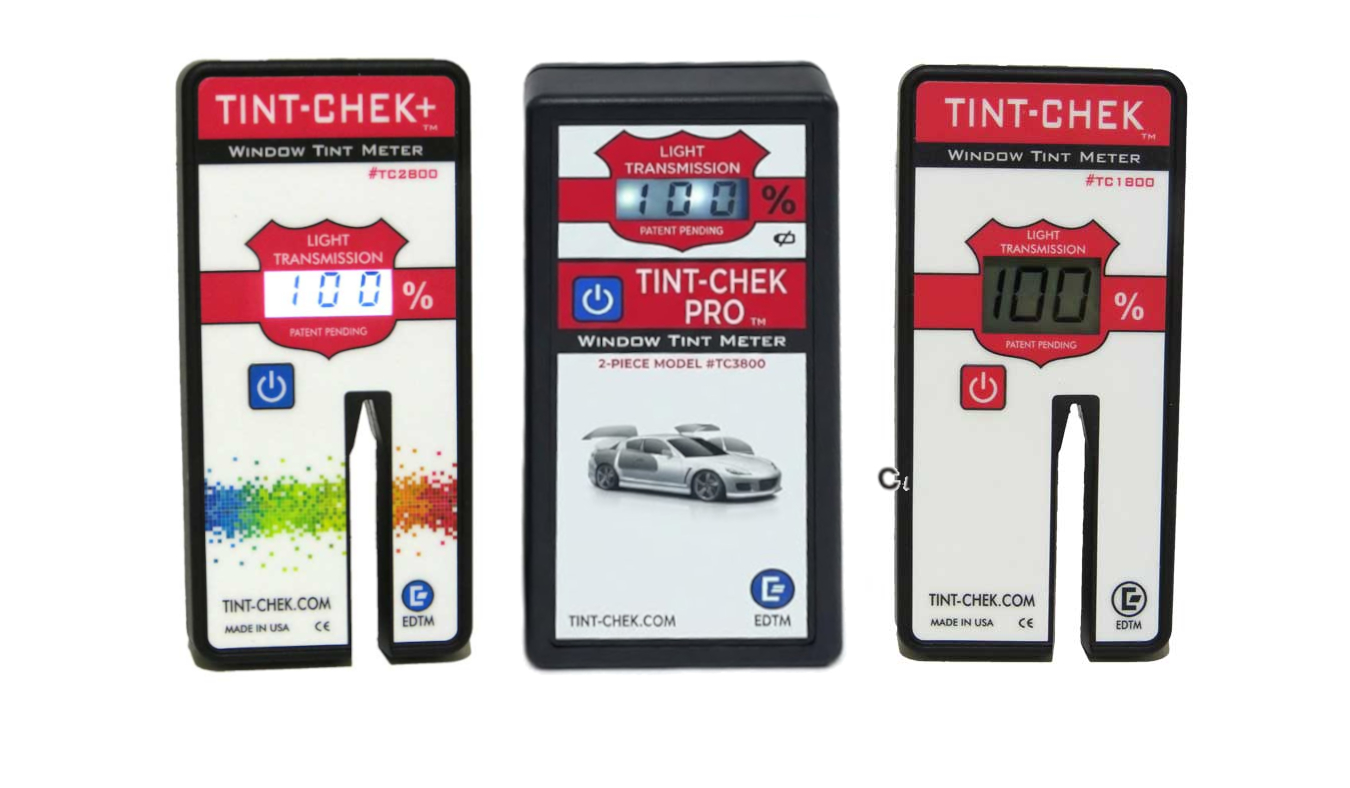
Once you know the limit, you need the right tool to test it. A one-piece meter such as the TC2800 Tint-Chek + is designed for side window testing and has a backlit display for low-light conditions and 0.1% resolution. For windshield and rear window testing, the two-piece TC3800 Tint-Chek PRO is the model built for the job. If your agency is choosing a tint meter for patrol, match the meter to the windows you test most often.
Frequently Asked Questions
Are window tint laws the same in every state?
No. Limits, definitions, and exemptions vary, and states update them from time to time.
What does VLT mean on a tint citation?
Visible light transmission: the percentage of visible light passing through the glass and film.
Where can officers find the current limit?
In the state statute and in your agency’s legal guidance. Third-party charts are a convenience, not a substitute.
Do the same rules apply to every window?
Usually not. Windshield, front side, rear side, and rear windows often have different limits.
Verify First, Then Measure
A defensible tint stop starts with the right limit and the right measurement. Review the Tint-Chek meters built for law enforcement to match your tool to the windows you test.