

Blog
Window Tint Enforcement Refresher Training: A Yearly Skills Check for Experienced Officers
Experienced officers can drift from best practice without noticing. Laws change, habits form, and equipment ages. A short yearly refresher keeps tint enforcement consistent, defensible, and safe.
Why Refresher Training Matters
• Statutes and policies change, and officers need to hear about updates.
• Small technique shortcuts add up and can affect results.
• Court testimony is stronger when officers can describe their method clearly.
What to Cover Each Year
1. Law and policy updates
Review any changes to state statutes, exemptions, and agency policy since the last session.
2. Meter handling and checks
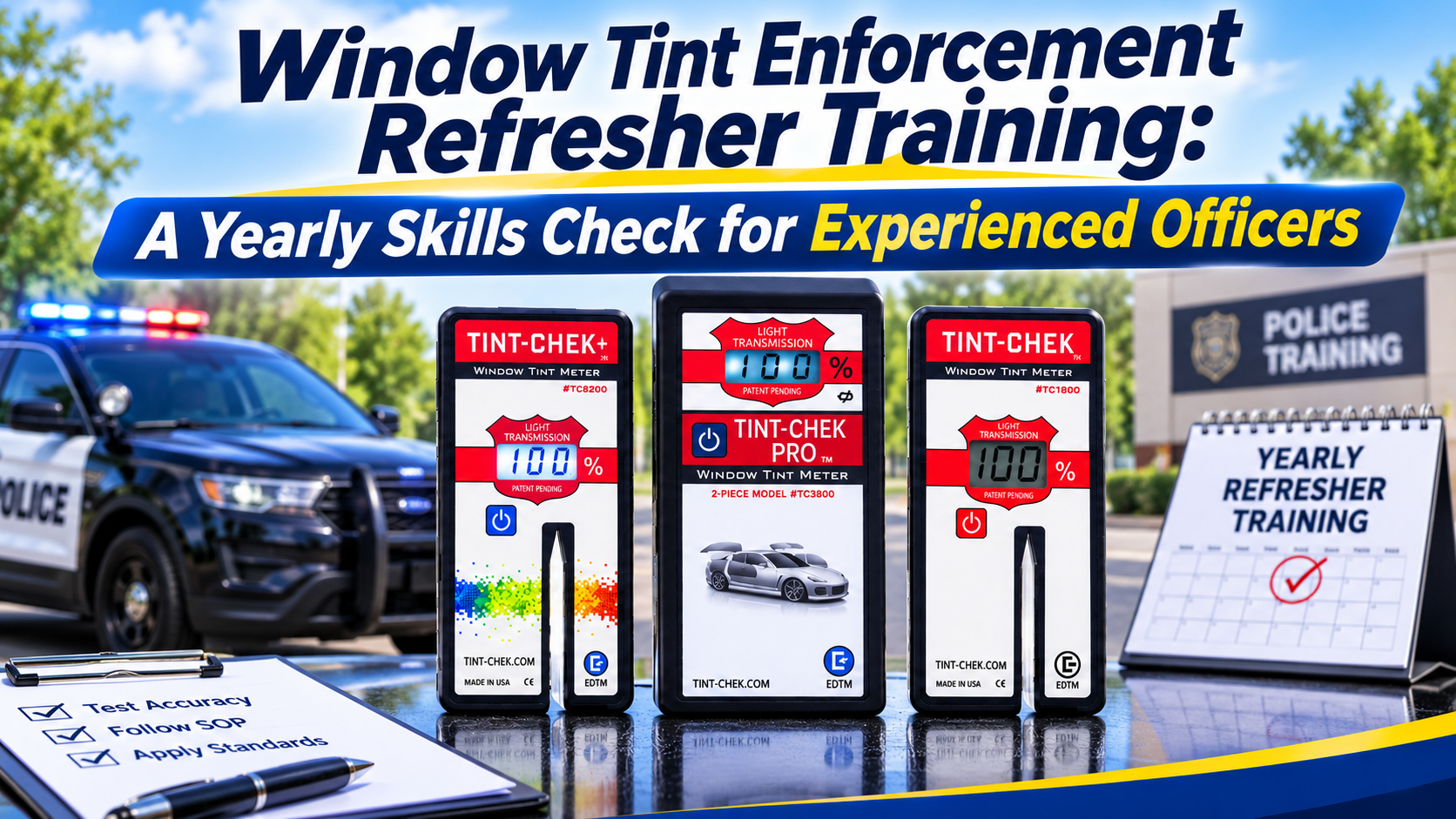
Revisit how to handle and prepare the tint meter, including pre-use checks. Remind officers that Tint-Chek meters read accurately to ±2%, and that the Tint-Chek PRO displays to the nearest 0.1% while its accuracy remains ±2%. Review the agency's policy on borderline readings.
3. Calibration and care
Confirm that every unit is on schedule and that officers know the procedure. Review guidance on tint meter calibration and on tint meter maintenance so batteries, storage, and handling stay on track.
4. Technique and common mistakes
Practice taking readings on sample glass and compare results between officers. Discuss the mistakes seen in the past year.
5. Documentation and testimony
Review a sample record and have officers practice explaining their method as if they were on the stand.
6. Officer safety
Revisit positioning, communication with drivers, and how to conduct the test without compromising the stop.
Sample 90-Minute Agenda
|
Time |
Topic |
|
0:00-0:15 |
Law and policy updates |
|
0:15-0:35 |
Meter handling, checks, and borderline readings |
|
0:35-1:00 |
Hands-on stations with sample glass |
|
1:00-1:15 |
Documentation and testimony practice |
|
1:15-1:30 |
Safety review and questions |
Adjust the length and format to fit your agency.
Track Completion
Keep a record of who attended and when, so the department can show that officers stay current.
Annual Refresher Checklist
• Statute and policy changes reviewed
• Meter handling and pre-use checks practiced
• Calibration and maintenance records confirmed
• Documentation samples reviewed
• Testimony practice completed
• Safety procedures revisited
Hands-On Station Ideas
1. Sample glass station: officers take readings and compare results.
2. Mock stop station: officers test, document, and explain the result to a partner.
3. Records station: officers review and correct a flawed sample record.
4. Testimony station: a partner asks cross-examination questions about the test.
Issues to Watch For
• Inconsistent technique between officers
• Meters that have not been checked on schedule
• Incomplete or missing documentation
• Out-of-date copies of the statute in vehicles or binders
Make It Stick
Close the session with a short written or practical check. Provide a one-page summary for officers to keep, and schedule the next refresher before everyone leaves the room.
Frequently Asked Questions
How often should officers get tint refresher training?
Many agencies choose yearly, but follow your agency's policy and any state training requirements.
Should refresher training include hands-on practice?
Yes. Hands-on readings on sample glass are the best way to keep technique consistent.
Who should lead refresher training?
Many agencies choose a certified instructor, a traffic unit supervisor, or a training officer experienced with the meter. Follow your agency's policy.