

Blog
Tint Meter Maintenance for Police Fleets: Batteries, Storage, and Care
A tint meter that is dead, dirty, or out of calibration is worse than no meter, because it can undermine a citation. The good news is that Tint-Chek meters are simple instruments with a short maintenance routine. This guide covers the tint meter maintenance steps fleet supervisors and individual officers should build into their schedule.
Key Takeaways
• Replace the 9-volt battery soon after a low-battery warning, and use alkaline in the TC2800 and TC3800.
• Store meters in their carrying case within the rated storage range of -4 F to 158 F.
• Verify against the 27% and 59% standards regularly and keep a log.
• Pull a meter from service if it reads outside plus or minus 2% on good standards.
Know Which Meter You Are Maintaining
|
Model |
Design |
Display |
Battery |
|
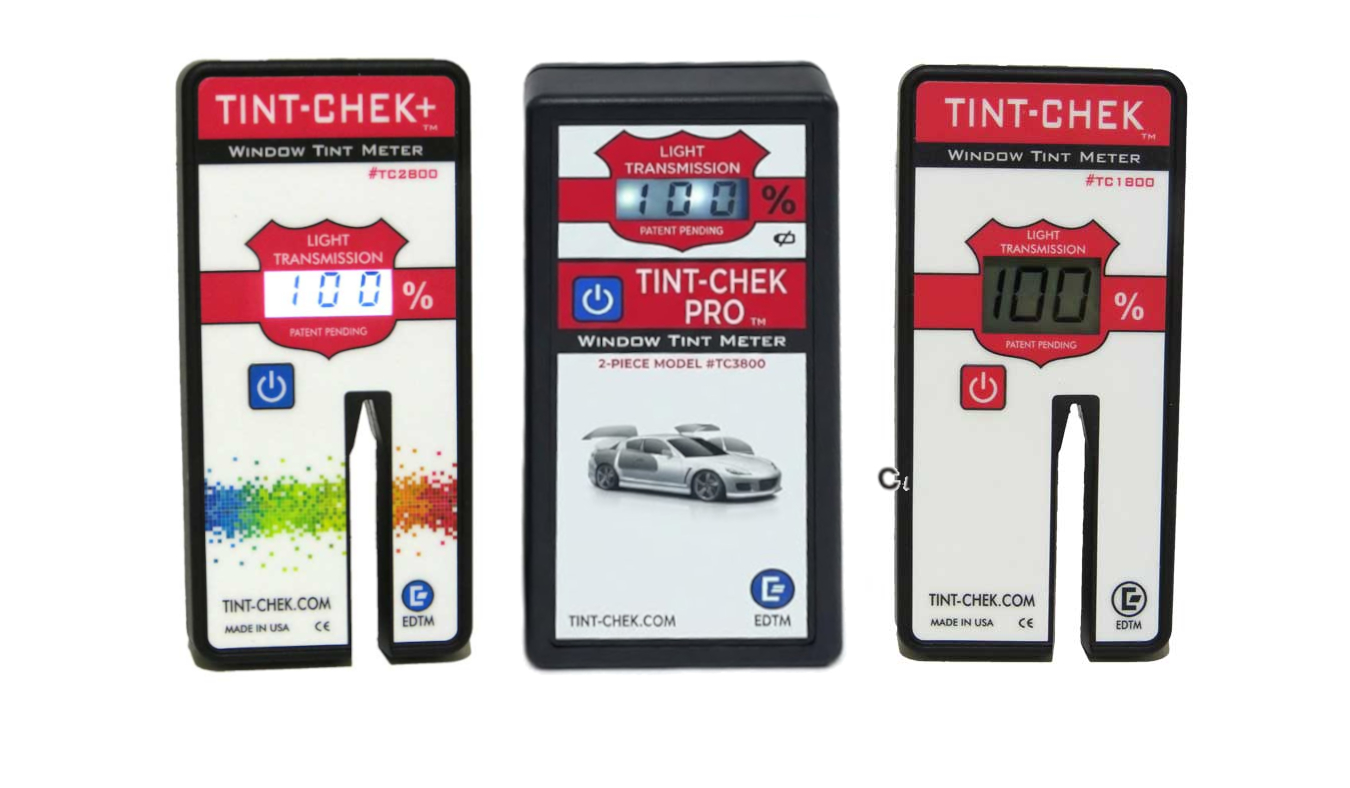
TC1800 Tint-Chek |
One-piece |
1% resolution |
9-volt battery |
|
TC2800 Tint-Chek + |
One-piece |
0.1% resolution, backlit |
9-volt alkaline battery |
|
TC3800 Tint-Chek PRO |
Two-piece (reflector and instrument units) |
0.1% resolution |
9-volt alkaline battery |
Each model is a police tint meter designed for law enforcement. The routines below apply to all three unless noted.
Battery Care
• Know the low-battery signal. On the TC1800 and TC2800, "-battery-" scrolls across the screen when voltage is getting low. On the TC3800, the battery indicator illuminates.
• Replace soon after the warning. The meter can still be used at that point, but the manufacturer recommends replacing the battery soon.
• Use alkaline batteries in the TC2800 and TC3800, as recommended by the manufacturer.
• Expect automatic shutoff. The TC1800 and TC2800 shut off after approximately 2 minutes of non-use, and you can turn them off immediately after each use with the power switch. The TC3800 powers off automatically when removed from the window, and holding the power switch shuts it off at any time.
• Batteries are not covered by warranty, so budget for spares.
On the TC3800, a slide-out battery cover keeps the electronics out of the way during replacement, so there is no need to open the unit and risk disturbing calibration.
Storage and Temperature
• Keep the meter in its protective carrying case when it is not in use.
• Operating temperature range is 0 F to 122 F (-17 C to +50 C).
• Storage temperature range is -4 F to 158 F (-20 C to +70 C).
• The TC3800 manual advises against storing the instrument in an automobile overnight during extreme temperature seasons. That is a good practice for any meter.
Cleaning and Care
tint meter care is mostly about keeping the sensing area clean.
• TC1800 and TC2800: make sure nothing is between the LED light source and the sensor. If the display shows "-E," remove anything blocking them, then turn the meter back on with no glass in the opening so it shows 100%.
• TC3800: keep the reflector area clean. Use compressed air to remove dust and a micro-fiber cloth for smudges that air will not remove. Blow off the back of the instrument unit as well.
• Suction cups (TC3800): their edges should not be bent or altered, and the unit’s felt pads are contoured so they do not touch the cups when the enclosures fit together correctly.
Calibration Checks
Every Tint-Chek meter ships with two NIST traceable calibration standards at approximately 27% and 59% VLT. Use them on a regular basis to confirm the meter reads within plus or minus 2% of the indicated values.
1. Clean the standards and check them for scratches.
2. Measure each one the same way you test a window.
3. If a reading falls outside the range, inspect the standards first. If they are in good condition, stop using the meter until calibration is verified or corrected.
Store the standards in their resealable bag inside the carrying case. If they are scratched or damaged, replacements are available: part TC1810 for the TC1800 and TC2800, and part TC3811 for the TC3800.
Troubleshooting the TC3800
• E1: measured VLT is less than the allowed percentage. Check alignment at start-up, and do not measure in free air.
• E2: measured VLT is greater than the allowed percentage. Re-align the units with no glass in between and test again.
• E3: the starting value was different than expected. Align the enclosures properly and clean the reflector lens.
A Maintenance Log You Can Copy
|
Date |
Meter ID |
Standard 1 reading |
Standard 2 reading |
Within +/-2%? |
Battery replaced? |
Initials |
|
|
|
|
|
|
|
|
|
|
|
|
|
|
|
|
|
|
|
|
|
|
|
|
A dated log shows that meters were checked on schedule. It also helps spot a meter that is drifting or an officer who needs a refresher.
Training Officers on Meter Care
• Show new users how to read the low-battery signal and what the error displays mean.
• Demonstrate the calibration-check procedure with the actual standards.
• Remind users to keep the meter and standards in the case, not loose in a vehicle.
• Explain that tampering voids the warranty: the warranty does not apply to a unit repaired or altered by anyone other than the manufacturer.
When to Pull a Meter From Service
• Readings on clean, undamaged standards fall outside plus or minus 2% of the indicated values.
• The meter shows repeated error messages after you have cleaned and cleared the sensing area.
• The unit has been dropped or physically damaged.
• You cannot verify calibration for any reason.
In these cases, stop using the meter and contact the manufacturer. Keeping a spare meter in your fleet means a failed check does not stop enforcement work.
Warranty Basics
The manufacturer warrants Tint-Chek models against defects in material and workmanship for 12 months from the original date of shipment. The unit must be returned to the manufacturer’s factory, prepaid by the user. The warranty does not apply to units repaired or altered by anyone other than the manufacturer, and batteries are not covered.
A Simple Fleet Maintenance Checklist
|
When |
Task |
|
Start of shift |
Inspect the meter, check for low-battery warnings, run the calibration standards |
|
After each use |
Turn the meter off and return it to the case |
|
As needed |
Clean the sensing area or reflector; replace the battery |
|
Periodically |
Review calibration check records; inspect the standards for scratches |
|
Any time a reading is off |
Stop using the meter and verify calibration |
Frequently Asked Questions
How often should a police tint meter be calibrated?
The manufacturer says to verify the meter against the supplied standards on a regular basis. Set your own schedule based on department policy and use.
What battery does a Tint-Chek use?
All three models use a 9-volt battery. Alkaline is recommended for the TC2800 and TC3800.
What does "-E" on the display mean?
On the TC1800 and TC2800, it means the meter detected a calibration problem, often because something was blocking the sensor. Remove the obstruction and turn it on without glass in the opening.
Protect the Reading by Protecting the Tool
Regular battery changes, clean storage, and routine calibration checks keep your meters ready and your readings credible. View the full Tint-Chek lineup of tint meters made for law enforcement.