

Blog
Do Tint Meters Work on Curved Rear Windows? What Officers Need to Know
Short answer: A two-piece tint meter on curved rear windows is the right type of tool, because it is designed to test rear windows and windshields. Horseshoe meters slide over lowered side glass and cannot reach a rear window. How well a reading holds up on a strongly curved window depends on how the two pieces sit, so placement matters.
Which meters can test rear glass
• Two-piece meters: the TC3800 Tint-Chek PRO places one part on each side of the glass. EDTM's description says it allows testing of windshields as well as rear and side windows.
• Horseshoe meters: designed to fit over the edge of a lowered side window, so they cannot measure rear windows.
A 2017 article in Window Film magazine says the two parts of the TC3800 couple magnetically so the pieces align for accurate results. Good alignment is the thing to protect on curved glass.
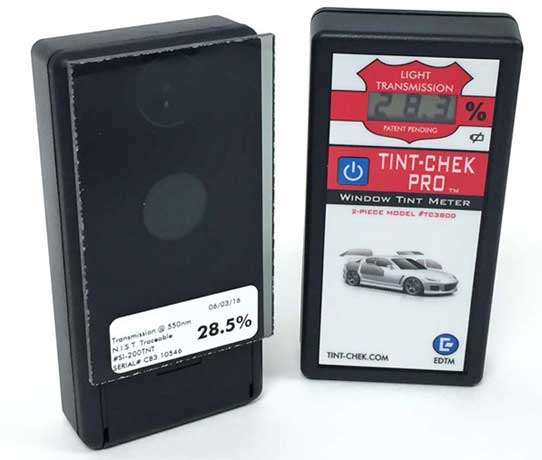
Why curvature matters
The meter assumes the light passes through the glass the way it does when the two parts are directly facing each other. On a curved window, it is harder to keep the pieces flat and aligned. The TC3800 specification also covers glass and film up to 1/4 inch (6.5 mm) thick, so check the combined thickness too.
Practical steps for officers
1. Clean both sides of the area to be tested.
2. Choose a spot where the glass is as flat as possible.
3. Place the pieces so they sit flush and aligned.
4. Take several readings at slightly different spots.
5. Note the spread. If readings vary widely, record it.
6. Follow your agency policy for documentation.
See also the Tint-chek guide on common tint meter mistakes.
Frequently asked questions
Can a horseshoe meter test a rear window?
No.
Should I take more than one reading?
Yes, and record all of them.